Understand AI systems well enough to use them responsibly.
Technical guides for builders and operators—written in plain language, grounded in primary sources, and explicit about what is fact, estimate, or analysis.
28 canonical guidesSource-backedUpdated September 5, 2026Subscribe via RSS
Three letters separate the software you already use from the thing everyone argues about at dinner. The difference is not raw cleverness—it is generality, autonomy, and how long a system can stay useful without a human rescuing it.
Most AGI futures are arguments about a bottleneck. Pick the bottleneck—compute, energy, experiments, institutions, or trust—and the future writes itself. Here is what the evidence says about each one.
Every benchmark that measures AGI eventually stops measuring AGI, because the moment a test is famous it becomes training data. Here is how the serious evaluations handle that, and how to build one of your own.
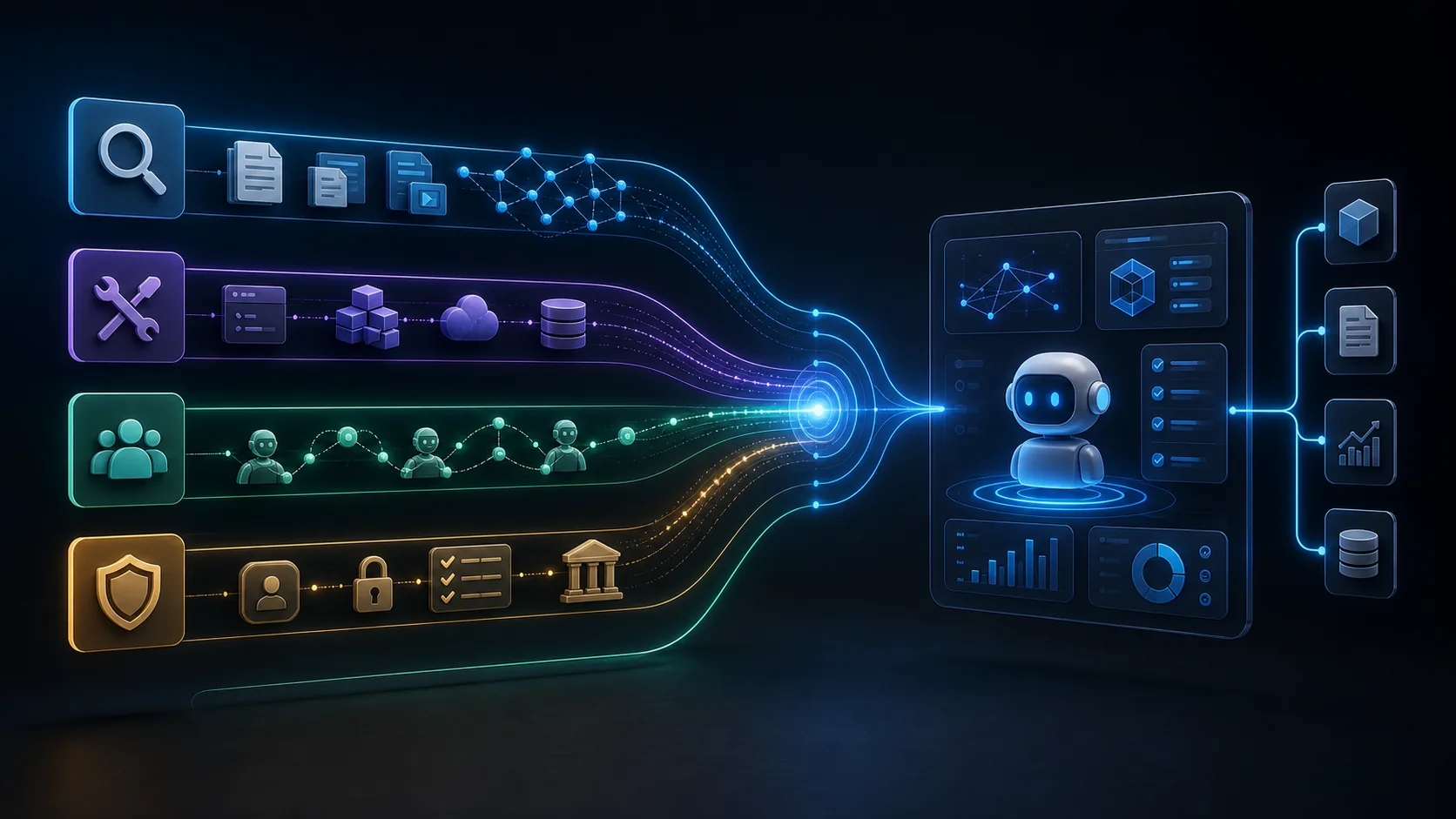
A frontier model with no harness is a very expensive autocomplete. Most of the capability people attribute to models in 2026 lives in the scaffolding around them—and that scaffolding is where the hard engineering is.
Software agents get a retry button. Robots get a broken glass and an incident report. That single asymmetry explains most of the gap between what agentic AI can do on a screen and what it can do in a kitchen.
Two frontier models launched three days apart at the identical $10/$50 sticker price. Here is what separates them on the benchmark sheet, in the cache economics, and against the budget tier that costs a hundredth as much.
A feature checklist cannot tell a kernel sandbox from a git worktree. Two axes can. We placed Kendr and 22 rivals on a depth-by-breadth map, across both competitions it fights: cowork and coding.
Feature checklists do not explain why one coding agent finishes a refactor and another corrupts a repository. Ten architectural dimensions do. Here is the rubric, the scores, and the method.
Strip away the terminal UI and every coding agent is the same eight layers. Understanding them tells you exactly why one harness is safe to leave unattended and another is not.
These four share the same flat loop and diverge on everything underneath. A side-by-side on the mechanisms that decide how each one behaves when a task goes wrong.
Most agents that claim to be sandboxed are running a string blocklist. Here is what real containment looks like, and why a strong sandbox with a weak approval gate still ships the wrong change.
Almost every coding agent can restore a conversation. Very few can tell you which file edits were half-applied, which approval you never answered, and who owned the workspace when the power went out.
The local-versus-cloud argument is usually framed as privacy versus convenience. The more useful frame is two independent planes — where models are chosen and paid for, and where code is actually executed.
Every independent harness has to make one architectural bet and defend it. That makes the small projects far more legible than the big ones — and a useful map of where the field is heading.
Grok 4.6 is xAI's new flagship model for coding and knowledge work. Here is the practical API contract, cost structure, benchmark evidence, and evaluation plan.
OpenAI now has primary sources identifying Astra as an upcoming model with mathematics and cyber-capability evidence. The broader 'answers to assignments' story is an interpretation that needs careful sourcing.
A benchmark is a measurement under specific conditions—not a permanent ranking of intelligence. Use this framework to understand what the score can and cannot tell you.
A router is a policy that makes a model decision for every request. The right way to improve it is to evaluate the whole system—including fallbacks and cost—not just the underlying models.
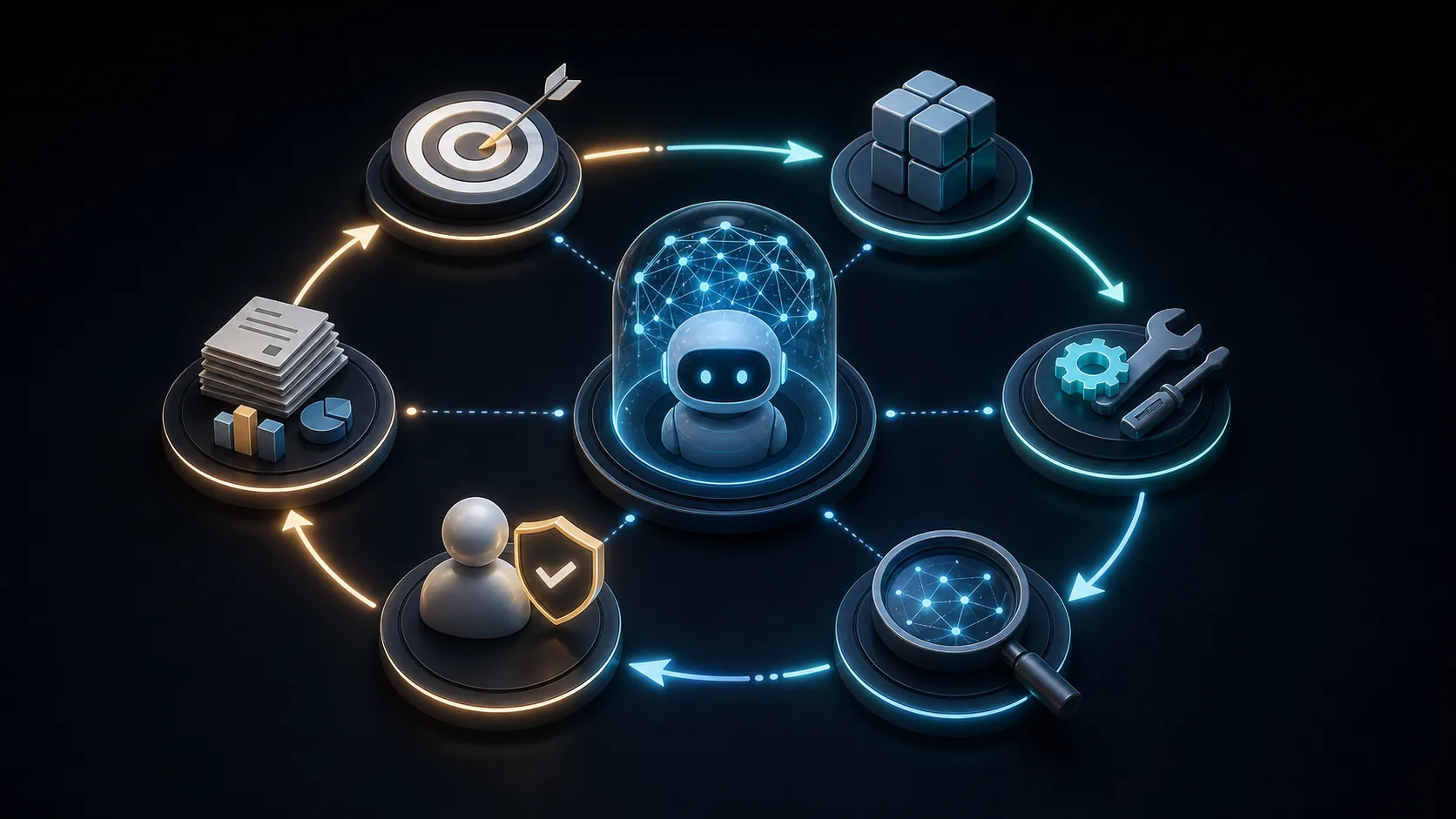
Deep research is useful when the work needs a plan, multiple sources, comparison, and a durable evidence trail. This workflow keeps the human responsible for the question and the decision.
AI is most useful when the workflow has a clear input, reviewable output, and named owner. These ten patterns move beyond prompting without pretending every task should be automated.
‘Local’ describes where inference runs, not an automatic security guarantee. A trustworthy decision maps every data flow and chooses the boundary per workload.
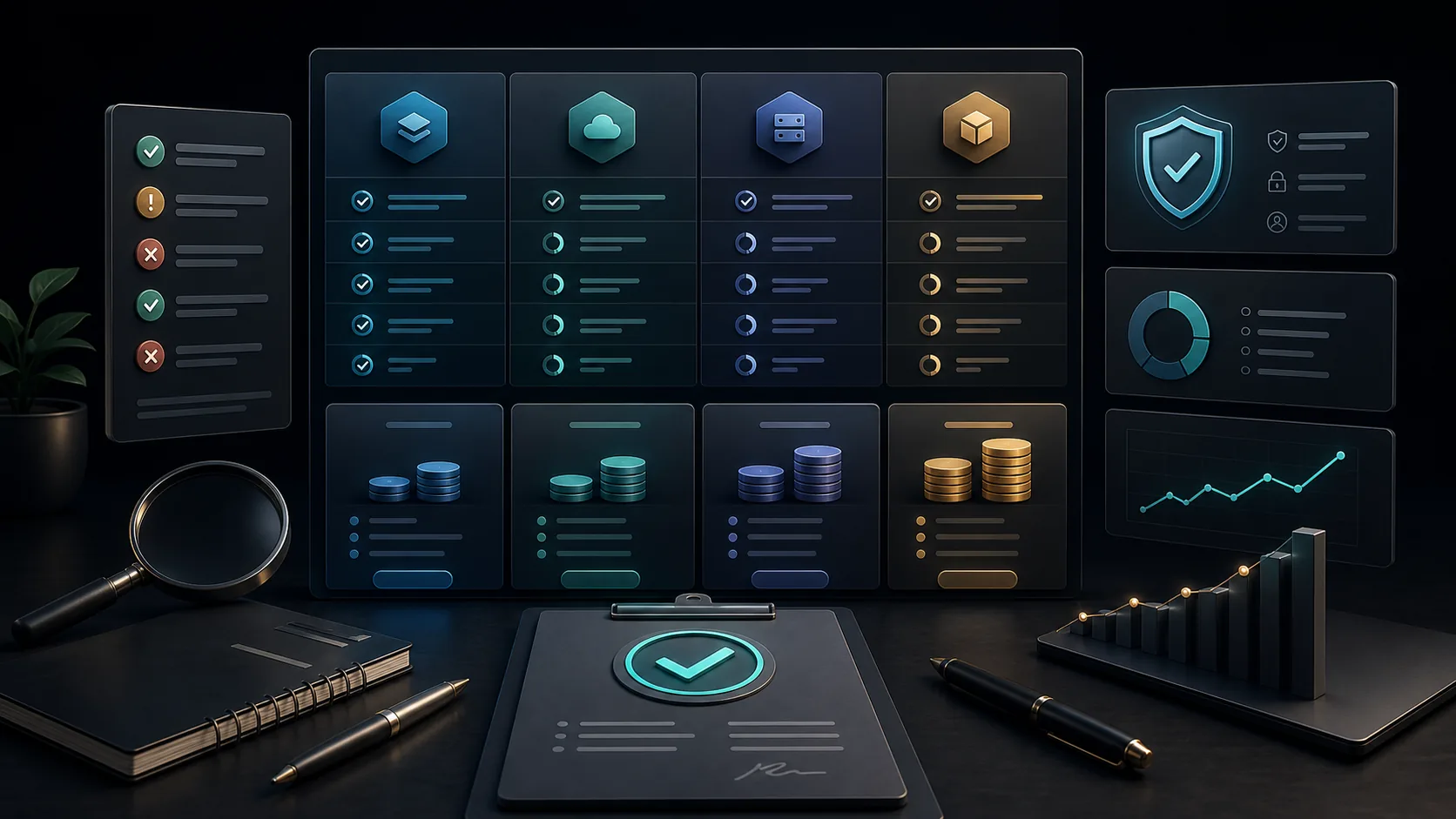
The cheapest token can produce the most expensive workflow, and the highest benchmark score can miss the latency budget. Compare systems on accepted work under real constraints.
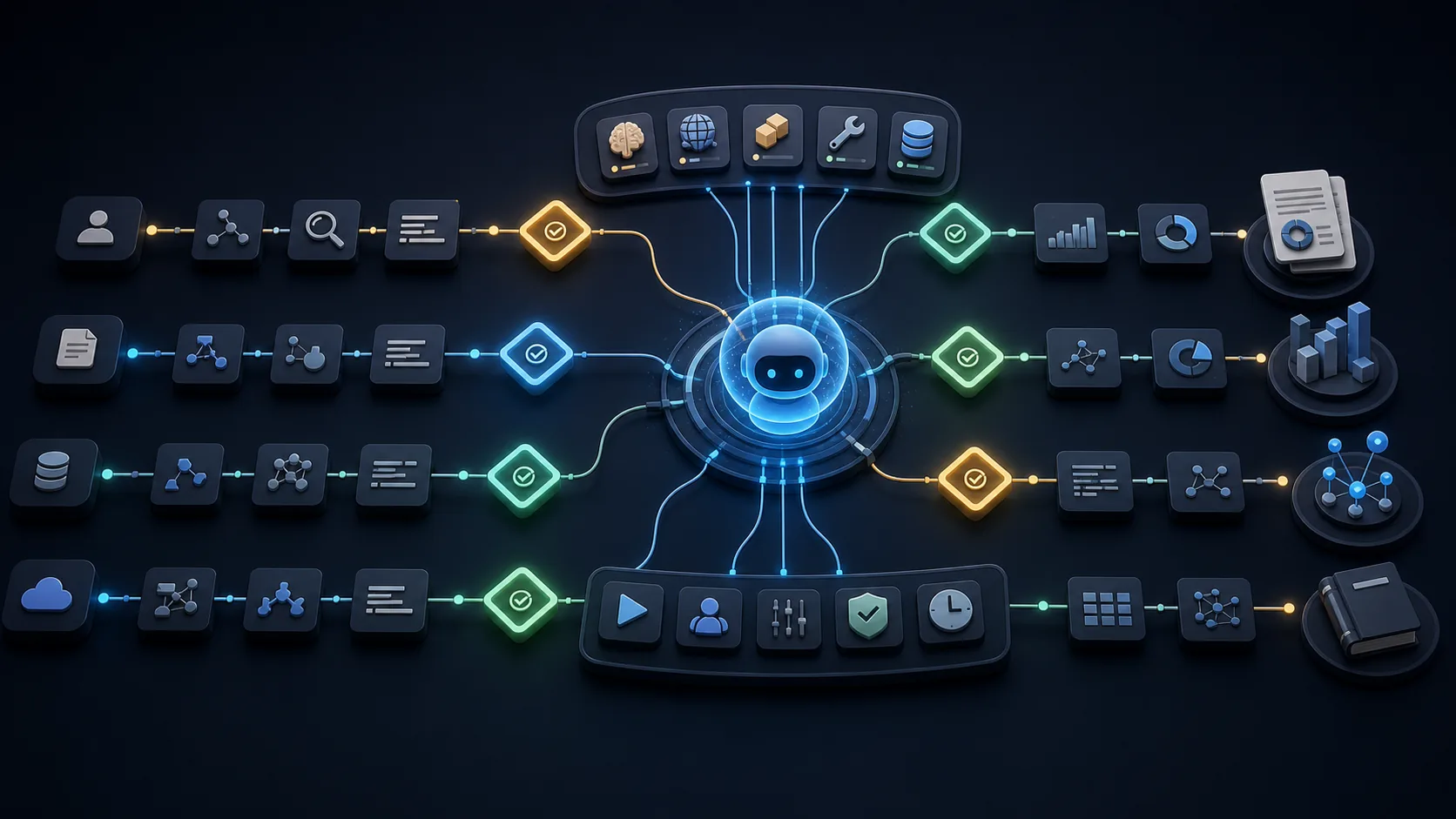
Multimodal AI is not one sense added to a chatbot. It is a pipeline of encoders, token budgets, temporal sampling, tool calls, and output modalities that must be evaluated together.
Jobs are bundles of tasks, relationships, judgment, and accountability. Current evidence points to uneven transformation—not one universal automation story.
Leaders agree that AI is consequential. They disagree about the bottleneck: innovation, infrastructure, safety, access, governance, or social adaptation. Those frames shape what they build and regulate.
A million-token window means a million tokens will be accepted without an error. It does not mean the model will find the sentence you buried at token 400,000 — and the published number cannot tell you which.
A fabricated citation is easy to catch. The dangerous one is real, resolvable, correctly formatted, and does not say what the sentence citing it says. Nothing about its appearance will warn you.
The headline rate on a model page is the input price, and input is usually the cheapest thing about a request. Four other numbers decide what you actually pay.
No articles match that search. Try a broader term or choose all topics.