33 lesser-known coding agent CLIs, and the bets they are making
Every independent harness has to make one architectural bet and defend it. That makes the small projects far more legible than the big ones — and a useful map of where the field is heading.
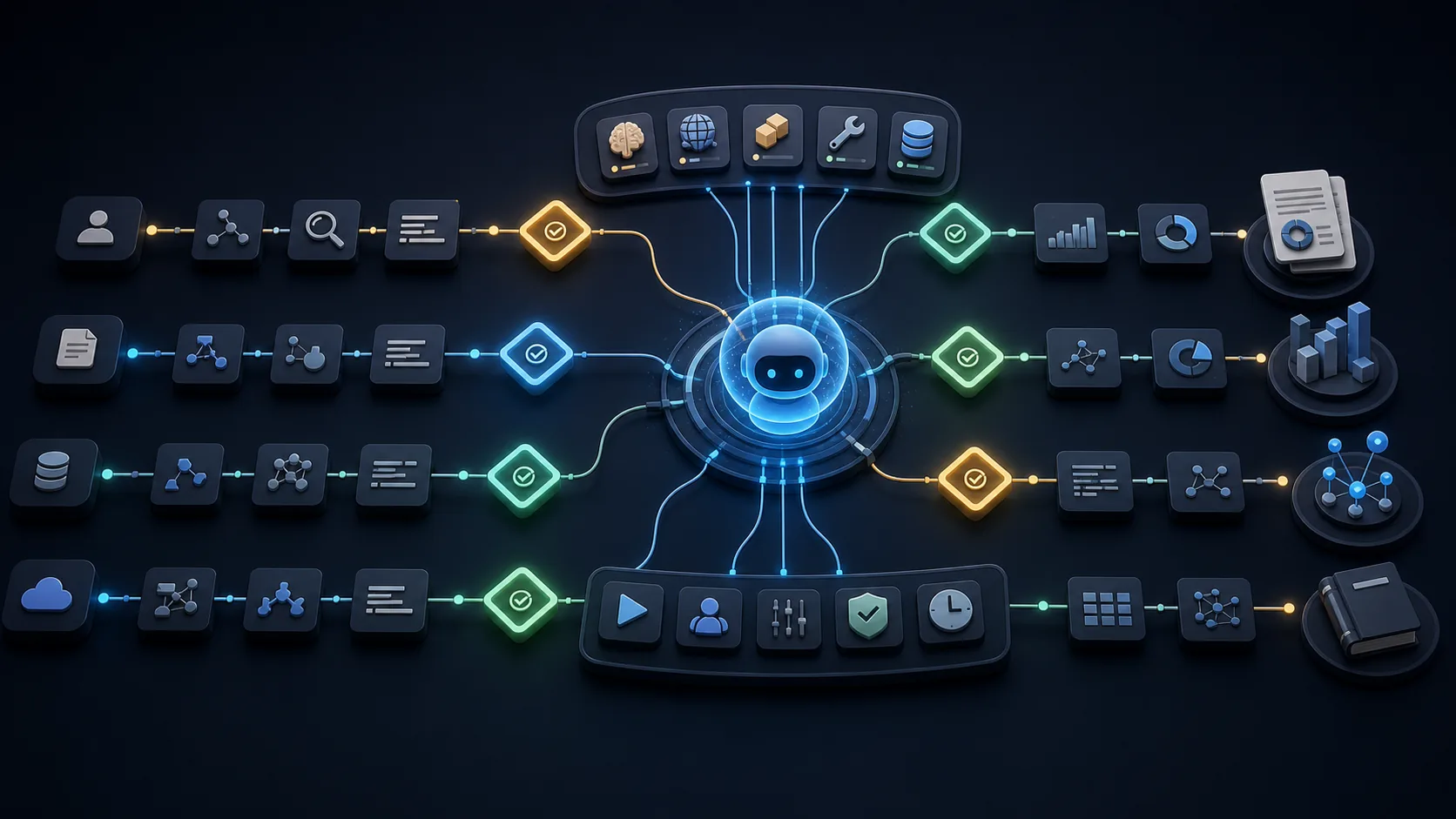
The independent coding-agent field organises into six architectural bets: minimal-footprint binaries (agentty, Waveloom, Zap, picocode, QQCode), governance and auditability (DvalinCode, Grinta, OpenSquilla), context efficiency (Keen Code, Waveloom), self-improvement and memory (Hermes Agent, jcode), breadth clones of Claude Code (openHarness, Coro Code, Kode CLI, Every Code), and pipelines that reject the agent loop entirely (Agentless). Scored on a 100-point architecture rubric, the strongest independents are Hermes Agent (72), DvalinCode (70), OpenSquilla (70), and jcode (68).
Why the small projects are worth reading
A curated directory tracked more than 110 terminal-native coding agents and harnesses as of 13 August 2026.[1] Most readers will never adopt more than two. The reason to read the rest is that a small project cannot afford to be good at everything, so it has to pick one thesis and build the whole product around it. That makes the architecture legible in a way that a mature vendor product, which has quietly absorbed every feature its competitors shipped, no longer is.
The scores below use the same ten-dimension rubric as our full harness comparison, and they carry an explicit caveat: they are derived from published documentation and repository evidence rather than sustained hands-on operation, so treat them as an ordering to investigate rather than a verdict.[2]
Bet one: the harness should be a single small binary
The most visible independent trend is a rejection of the Node and Electron stack that the mainstream tools are built on. agentty is the extreme case — a native C++ terminal agent shipping as a single static binary of roughly 14 megabytes with sub-millisecond cold start and no runtime dependencies at all, sandboxed by default via bubblewrap or the macOS sandbox, able to act as an ACP client inside Zed and to drive air-gapped hosts over SSH. Waveloom makes the same bet in Go at around 19 megabytes; Zap, QQCode, and picocode make it in Rust.
The thesis is not vanity. Startup cost and memory footprint stop being cosmetic the moment you run twenty agents in parallel, and jcode makes that dependency explicit: it is a Rust terminal agent tuned specifically for RAM and startup latency, at roughly 28 megabytes of resident memory per session with local embeddings disabled, built so that many concurrent sessions are affordable. Once parallel agent fleets became a normal workflow, per-session cost became an architectural constraint rather than a benchmark boast.
Bet two: governance is the product
A smaller group has concluded that the interesting problem is not capability but accountability, and these are the projects worth watching if your constraint is regulatory. DvalinCode is the clearest statement of the thesis: an organisation policy engine, network egress enforced both by per-request checks and by operating-system-sandboxed subprocesses, a tamper-evident hash-chained audit trail, inline diff approval, and a durable session journal — shipped as a provider-neutral local-first binary with a built-in web interface.
OpenSquilla approaches the same territory from a runtime-design angle, with a self-hostable microkernel architecture, bubblewrap and Seatbelt sandboxing, machine-learning-based tier routing, and a gateway mode. Grinta targets long-horizon autonomous execution with durable state and recovery, structured tool orchestration, LSP and DAP integration, and validation-gated completion — a rare instance of an independent project treating debugger-protocol access as a first-class capability.
Read together, these three are converging on the same conclusion that the durability layer is where the field is thinnest, which matches what a broad rubric scoring shows: durability was the weakest dimension across the whole full-harness tier.
Bet three: the scarce resource is context, not capability
Keen Code’s thesis fits in one sentence: replace raw tool traces in the conversation with lean structured turn summaries, so the context window carries conclusions rather than transcripts. It backs that with full transparency — every prompt, design document, and implementation plan is written to disk as markdown — which also makes it one of the most readable projects in the field for anyone studying prompt design.
Waveloom attacks the same problem from the other end with four-tier context compaction and three distinct subagent modes it calls Fork, Cold, and Explore, plus provider prompt-cache awareness for long-context efficiency. Zap takes a third route, injecting only skill-relevant context rather than a large fixed system prompt, and maintaining a SQLite code index for fast symbol lookup — notable because a real symbol index is something several much larger harnesses still lack.
These are the projects most likely to influence the mainstream, because context cost is the one constraint that gets worse as models get better: a larger window invites a larger prompt, and the bill follows.
Bet four: the agent should improve itself
Hermes Agent is the largest independent project on this list and the most ambitious: a self-improving loop with persistent memory, automated skill creation, sandboxed code execution over socket-based RPC, support for hundreds of models, and reach into Telegram, Slack, Discord, and WhatsApp. It scores highest in the independent tier at 72, mostly on context, model breadth, extensibility, and surface reach.
The pattern is spreading. jcode ships agent memory alongside swarm mode and browser automation; several projects now derive reusable skills from session evidence rather than requiring you to author them. The open question — and it is a real one — is verification. An agent that writes its own memory will eventually write a wrong conclusion about your codebase and then act on it repeatedly. Inspectable, editable, per-fact memory files are the mitigation worth insisting on, and the projects that store memory as opaque blobs should be treated with more caution than their feature lists suggest.
Bet five: rebuild the leader, openly
A large sub-population exists to reproduce Claude Code’s surface under a permissive licence. openHarness is the most complete: 78 slash commands, 42 tools, MCP over stdio, HTTP and SSE with OAuth, hooks, subagents, and plan mode, working against Anthropic, OpenAI, Ollama, llama.cpp, and LM Studio, and shipping both npm and Python SDKs. Coro Code and Kode CLI occupy similar ground with narrower scope.
A parallel group forks Codex instead. Every Code adds validation, browser integration, theming, and multi-provider orchestration; Codex Infinity adds auto-continuation, parallel multi-agent runs, and CI repair loops; open-codex and nori-cli widen provider support. These forks are the most practical way to get a specific missing feature today, and the least likely to still be maintained in a year — a trade worth making consciously.
Two entries belong to a different category entirely. Mini-Kode is an educational reference implementation whose purpose is to be read, and Smol Developer was an important early demonstration that a model could generate a whole codebase from a prompt. Both score low on an architecture rubric and neither should be judged by it.
The independent tier, scored
Scores are out of 100 on the same ten-dimension rubric: loop, edit engine, context, isolation, permissions, durability, model layer, extensibility, surfaces, and cloud. They are indicative rather than measured.
| Harness | Score | Primary architectural bet |
|---|---|---|
| Hermes Agent | 72 | Self-improvement, memory, and multi-channel reach |
| DvalinCode | 70 | Governance: policy engine, enforced egress, hash-chained audit |
| OpenSquilla | 70 | Microkernel runtime with real sandboxing and tier routing |
| jcode | 68 | Per-session footprint so parallel fleets are affordable |
| ForgeCode | 66 | Model neutrality at scale with embedding-backed search |
| agentty | 66 | Single static binary, sandboxed by default, ACP and SSH reach |
| Waveloom | 64 | Context compaction tiers and differentiated subagent modes |
| openHarness | 63 | Open reimplementation of the market-leading surface |
| Codebuff | 63 | Explicit multi-agent pipeline with an SDK |
| Every Code | 62 | Codex fork with validation and multi-provider orchestration |
| Octomind | 61 | Community capability registry and runtime self-extension |
| Neovate Code | 60 | Plugin system and headless automation |
| Grinta | 58 | Long-horizon autonomy with LSP and DAP integration |
| zot | 57 | One agent, three drive modes: TUI, JSON, and RPC |
| Keen Code | 56 | Turn summaries instead of raw tool traces |
| Dexto | 55 | One harness across CLI, web and API with sub-agents |
| Smelt | 55 | Granular permissions with parallel subagents |
| Codex Infinity | 55 | Auto-continuation and CI repair loops |
| Zap | 54 | Skill-scoped context plus a SQLite symbol index |
| Kode CLI | 52 | Straightforward multi-provider terminal agent |
| g3 | 50 | Rust tool-running agent with skills and provider abstraction |
| Codel | 50 | Container-resident execution with a web interface |
| Groq Code CLI | 48 | Latency as the primary design constraint |
| open-codex | 48 | Provider breadth on the Codex base |
| QQCode | 47 | Speed, determinism, explicit control |
| Coro Code | 46 | Accessible free alternative to the leading CLI |
| picocode | 45 | Minimal agent for CI and codemods |
| Grok CLI | 44 | Terminal agent built on xAI models |
| nori-cli | 44 | Provider switching layered on Codex CLI |
| Agentless | 40 | No agent loop at all: localise, repair, validate |
| Claude Engineer | 38 | Early community harness for iterative development |
| Mini-Kode | 35 | Readable reference implementation for learning |
| Smol Developer | 33 | Whole-codebase generation from a single prompt |
How to adopt from this tier without regret
Independent harnesses fail in predictable ways: the maintainer stops, a provider changes an API, or a fork drifts from the upstream it depends on. Three habits make that survivable. Keep your instruction files in the standard formats so they transfer. Keep your extensions as MCP servers rather than harness-specific plugins, since MCP is now the portable layer. And avoid depending on a harness-specific state format for anything you would mind losing.
The strongest reason to run one of these alongside a mainstream tool is that they surface the questions the mainstream tools have stopped answering. A harness that ships an explicit audit trail forces you to notice that your primary tool does not have one. A harness that reports per-session memory makes you notice what twenty parallel sessions actually cost. That diagnostic value is real even when the adoption decision is no.
Frequently asked questions
Are lesser-known coding agents worth using?
As a second tool, often yes. They are usually built around a single thesis — auditability, context efficiency, small footprint — that mainstream harnesses handle generically, so they expose gaps in your primary tool even when you do not adopt them. As a sole dependency they carry real maintenance risk.
Which independent coding agent scores highest?
Hermes Agent at 72 out of 100, on the strength of persistent memory, automated skill creation, model breadth, and multi-channel reach. DvalinCode and OpenSquilla follow at 70, both on governance and sandboxing, and jcode at 68 on per-session efficiency.
What is Agentless and why does it score low?
Agentless is not a harness. It replaces the agent loop with a fixed pipeline: hierarchically localise the fault, sample candidate patches, and validate with regression and reproduction tests. It scores low on a harness rubric by design, and remains the strongest published argument that many agent loops are unnecessary overhead for well-specified repairs.
How do I avoid lock-in when trying independent harnesses?
Keep instruction files in the standard AGENTS.md-style formats, package your extensions as MCP servers rather than harness-specific plugins, and avoid storing anything you would mind losing in a harness-specific state format.
Sources and evidence
Primary and authoritative sources used for factual claims. Company research and executive forecasts are labeled as such in the article.
- 1Awesome CLI Coding Agents: 110+ terminal-native agents and harnessesbradAGI · 2026-08-13
- 2Kendr Research coding agent harness scorecardKendr Research · 2026-08-14
- 3
- 4Agent Client ProtocolAgent Client Protocol