MCP skill packs for AI agents: tools, instructions, and safer workflows
Connecting tools to an AI agent is only half the problem. The agent also needs instructions, boundaries, approval rules, and a repeatable workflow shape. That is what skill packs are for.
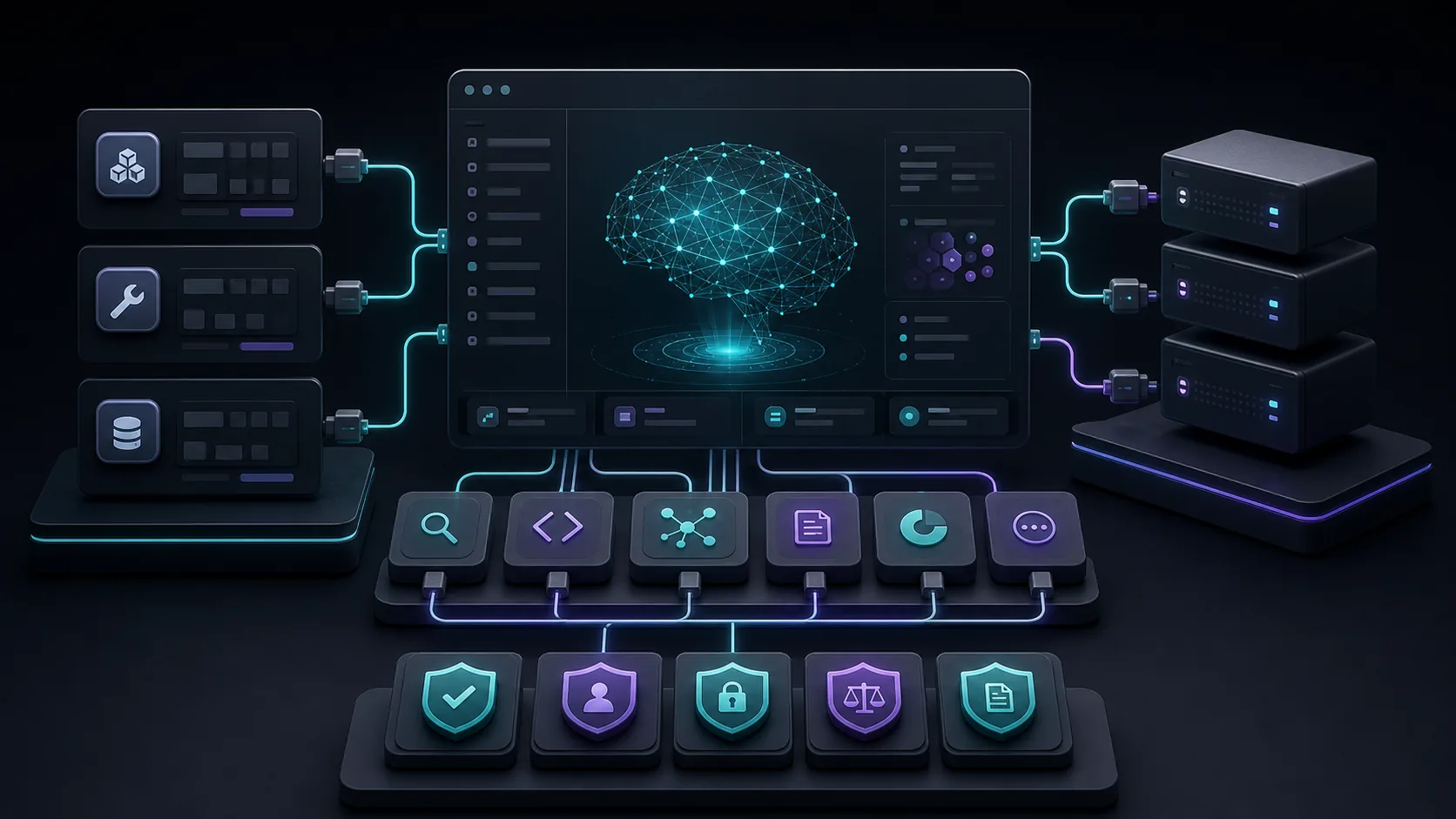
MCP gives AI applications a consistent way to connect to tools and resources. A skill pack adds the operating instructions around those tools: when to use them, what output to produce, what to avoid, and where human approval is required.
MCP gives agents access to capabilities
Model Context Protocol helps AI applications connect to external systems through a common pattern. An MCP server can expose tools, resources, and prompts. That makes it easier for agents to inspect files, query services, read documentation, search data, or perform actions through a known interface.
But a list of tools is not a workflow. A cloud tool might expose dozens of operations. A repository tool might read files, open issues, inspect pull requests, and trigger actions. The agent still needs to know what good use looks like.
Skill packs add workflow knowledge
A skill pack packages instructions, examples, constraints, and routing guidance around a capability. It can tell the agent how to triage a CI failure, write a postmortem, review Terraform, summarize an inbox, prepare a meeting brief, or investigate a cloud incident.
The best packs are specific. "Use cloud tools" is weak. "Investigate Kubernetes crash loops by checking events, probes, rollout history, resource pressure, and recent deployments before proposing a remediation" is much stronger.
Approval boundaries make tools safer
Agents should not treat every action equally. Reading logs is different from deleting infrastructure. Drafting an email is different from sending it. Preparing a patch is different from merging it. Skill packs should define which steps are read-only, which can be drafted, and which require explicit approval.
This is one reason Kendr treats skill packs as part of the workspace rather than as invisible plugins. The user should understand what a pack is designed to do and where control gates belong.
Marketplace pages are useful SEO when they map to real workflows
Each skill pack creates a natural content page because each one corresponds to a real problem. A cloud operations assistant, CI/CD failure triage pack, vendor evaluation workflow, or literature review assistant can explain the workflow, required context, safety model, and expected artifact.
That kind of content is stronger than generic AI blog copy. It is product-native, search-intent aligned, and useful to people deciding whether an agent can handle their actual work.
How Kendr uses MCP and skill packs
Kendr can combine MCP connectors, skills, local files, memory, and model routing in one workspace. A skill pack can tell Kendr how to approach the job; an MCP server can expose the tools; the user approval model can decide what is safe to run; and the final artifact can become reusable context.
This makes the agent less like a generic assistant and more like a repeatable workflow that a team can inspect, improve, and share.
- Define the real workflow and expected artifact.
- List the tools and resources the agent may need.
- Explain when each tool should and should not be used.
- Separate read-only, draft, and action steps.
- Add approval rules for sensitive actions.
- Include examples that match real user language.
Frequently asked questions
Is MCP the same as a skill pack?
No. MCP is a connection pattern for tools and resources. A skill pack is workflow guidance that tells the agent how to use capabilities for a specific job.
Do skill packs need code?
Some do, especially when they bundle MCP servers. Others can be mostly instructions, checklists, examples, and policy boundaries.
What makes a skill pack useful?
Specificity. A useful pack names the job, context, steps, risks, output format, and approval gates.