Make The Vendor Decision Reviewable After The Meeting Ends
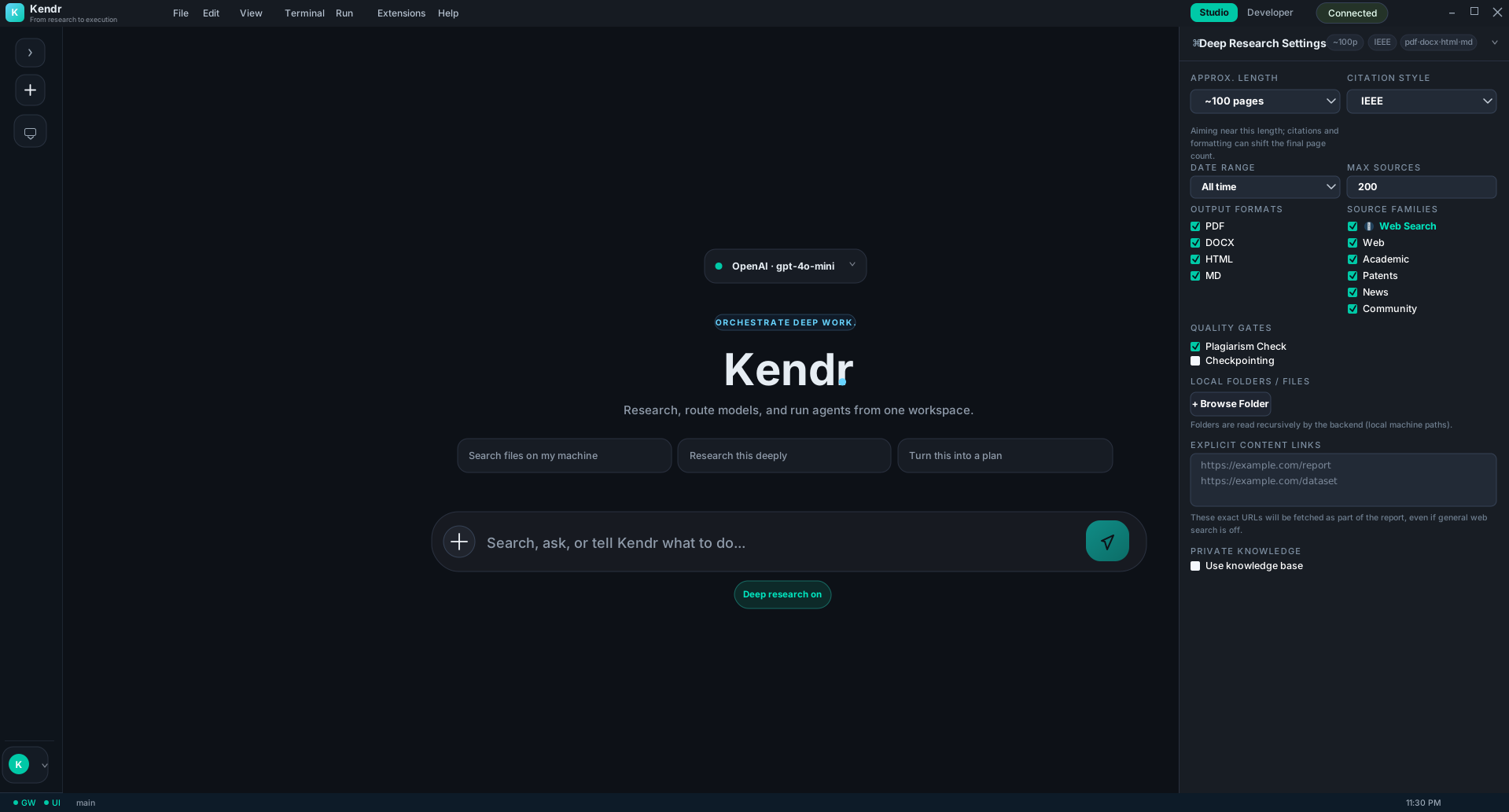
Use Deep Research to compare vendors against requirements, document tradeoffs, and keep the decision trail ready for later review.
Primary workflow
Research + Agentic Work
Collect requirements, compare vendors, and structure the recommendation.
Secondary value
Auditability
Keep the rationale, sources, and tradeoffs for future review.
Why Kendr
Evidence-backed decision path
The product helps teams move from sourcing to rationale without losing traceability.
Use on a real vendor shortlist
Run these prompts against a live evaluation. Replace the placeholders later with the decision matrix, recommendation, and evidence-backed rationale generated by Kendr.
What The Team Needs
Teams need more than feature checklists. They need requirement fit, pricing and risk context, and a recommendation they can defend in front of stakeholders.
What Kendr Should Produce
A weighted comparison, a recommendation with citations, open risks, and a saved decision package that supports later governance or audit review.
Run These In Kendr
Evaluate these vendors against our stated requirements.

Use:
- the requirement list
- vendor sites and documentation
- pricing or commercial clues
- security, deployment, or compliance signals
- any notes or prior evaluation materials we have

Identify where each vendor clearly fits, partially fits, or fails the requirement.
Build a decision trail for this vendor shortlist.

I need:
- a comparison matrix
- top tradeoffs between the finalists
- recommendation with reasoning
- key risks or unknowns still requiring validation
- a short explanation that leadership can review quickly

Keep citations attached to material claims.
Create or update a knowledge-base session named vendor-eval-[project]-[date].

Store the requirement set, comparison outputs, vendor evidence, and final recommendation artifacts.

Then summarize:
- what was decided
- why that decision was reached
- what still needs validation before procurement or rollout
What The Team Gets Back
Requirement fit table
Insert the vendor requirement map from Prompt 01.
Decision rationale
Add the recommendation and tradeoff narrative from Prompt 02.
Open risk list
Show what still needs confirmation before commitment.
Evaluation KB
Show how the evidence and recommendation are retained.