← Back to Use Cases
Finance · Research

Competitive Intelligence For Diligence

A buyer does not want generic research here. They want one place to gather company claims, compare competitors, pressure-test evidence, and preserve the diligence trail so the next meeting starts with context instead of guesswork.

Electron App · Deep Research

Pressure-Test The Company Story Before Capital, Partnership, Or Procurement Moves

Use Deep Research to gather company claims, compare them against outside evidence, and keep the diligence trail intact for the next review.
Research Question
Build a diligence-grade view of [company] and compare it with named competitors. Verify positioning, packaging, traction clues, and risk signals. Separate verified facts from inferred conclusions, then retain the session for follow-up review.
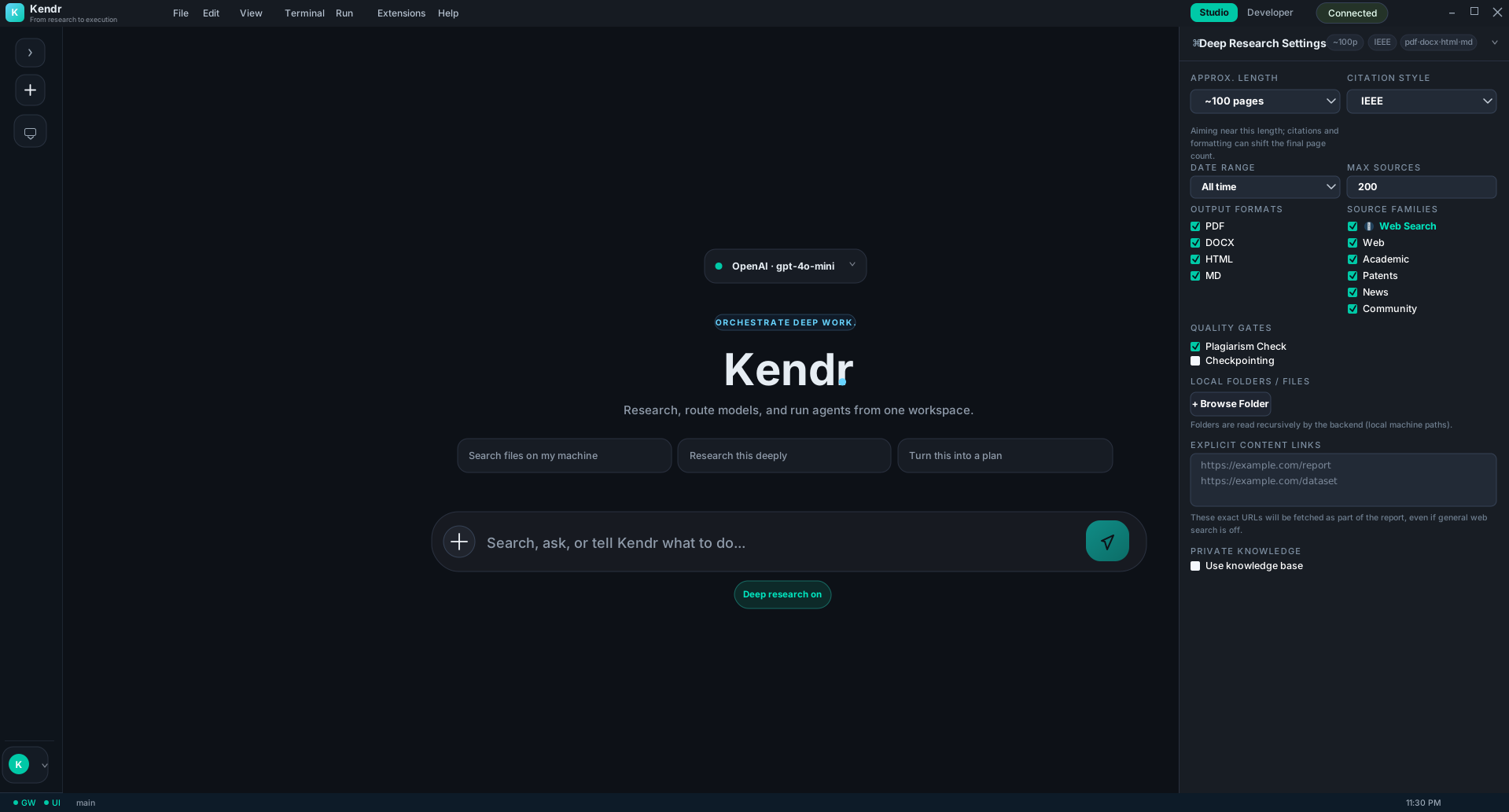
Kendr Electron app Deep Research workspace for diligence
Output package
Market brief, comparison matrix, unresolved diligence questions
One run should return the research package a buyer actually needs.
Decision motion
Support investment, partnership, vendor, or acquisition review
The work is about pressure-testing a company story before a real decision.
Reusable memory
Keep the diligence trail for the next review
Notes, sources, and open questions should carry forward.
Approx. length
40 to 60 pages
Enough room for citations, comparison tables, and open diligence issues.
Citation style
Inline citations + appendix
Keeps every material claim tied to evidence.
Date range
Last 24 months + older anchor sources
Fresh market movement with historical context where needed.
Source families
Company web, filings, reviews, news, partner pages
Balanced between self-description and external signal.
Quality gates
Citation required, contradiction check, open-question list
Surface weak evidence instead of burying it.
Private knowledge
Use diligence KB
Bring prior notes, decks, and analyst context into the run.
What Kendr Produces
Preview

A structured market brief that explains who the company serves, how it positions itself, what evidence supports that narrative, and where the story starts to weaken under comparison.

Section
Positioning, ICP, pricing, traction clues, and competitor frame
Decision value
Faster investment and partner review without losing evidence quality
Comparison Matrix
Table

Instead of scattered notes, the team gets one comparison surface across ICP, deployment, pricing model, strengths, weak evidence, and unresolved diligence questions.

Columns
Company, competitors, evidence strength, confidence, next questions
Why it matters
Turns market noise into a board-room ready comparison
Why Users Care
Outcome

Users evaluating Kendr here want more than a report generator. They want an evidence system that remembers prior work, carries the open issues forward, and reduces duplicate analyst effort.

Buyer lens
Do not make the team rebuild the same market picture every week
Product fit
Deep research plus reusable knowledge base
Knowledge Base Carry-Forward
Memory

At the end of the run, Kendr keeps the sources, notes, contradictions, and open diligence threads so the next analyst or partner can continue from the exact state of the prior review.

Saved context
Session name, source stack, extracted claims, unresolved issues
Follow-up
Use the same KB in future diligence or vendor review cycles
Run brief behind this setupExpand

The prompt sits behind the UI on purpose. Visitors should understand the workflow before they read the exact wording used to run it.

Research Prompt
Build a diligence-grade competitive intelligence brief on [company]. Use company pages, pricing, product docs, recent news, reviews, filings, and partner pages. Compare the narrative with [competitor 1], [competitor 2], and [competitor 3]. Separate verified facts from inferred conclusions and flag contradictions or weak evidence.
Retention Prompt
Save this run into a diligence knowledge base with sources, extracted claims, unresolved questions, and next follow-up actions so another teammate can continue without repeating the initial research.