What is Kendr?
Kendr is a workspace for deep research, agentic workflows, and reusable knowledge bases. It keeps the question, workflow, sources, and saved output in one place.
One place to ask the question, shape the research, and get back a result you can actually use and trust.
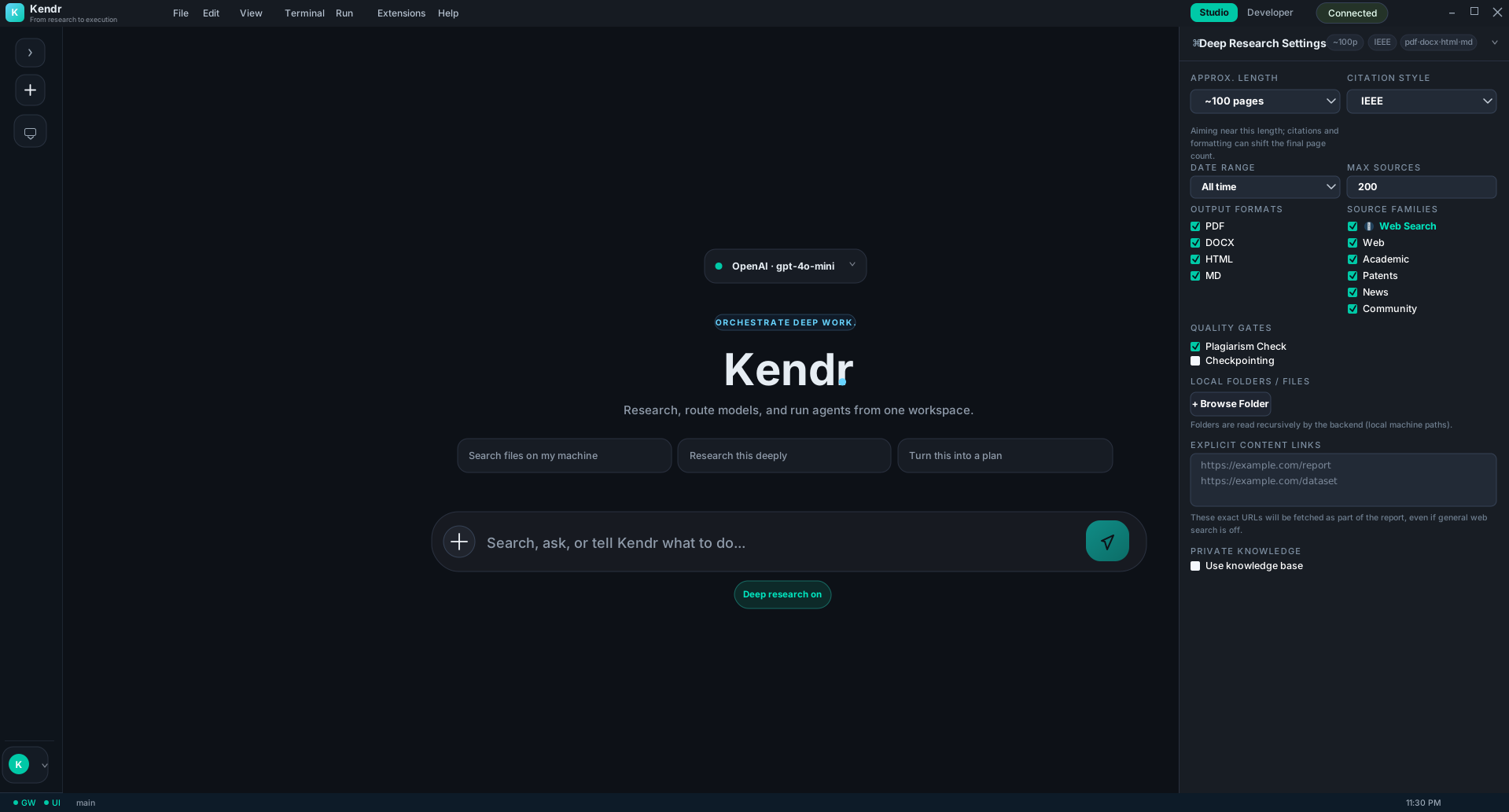
Built for the moments when the answer matters and you need the sources to stand behind it.
Most teams come in for one of three jobs: deep research, multi-step work, or a knowledge base that stays useful after the first run.
Gather evidence across web and local context, compare claims, and keep citations plus output artifacts in one run.
Turn a request into a routed plan with execution lanes, approvals, and controls instead of manual tool hopping.
Keep files, links, notes, and previous results as reusable memory so the next question starts with context already loaded.
People come to Kendr when they need to understand something quickly, move the work forward, and keep what they learned ready for the next decision.
Pull the strongest facts from scattered sources and keep the proof attached to the answer.
Go from a rough ask to real output without bouncing between tabs, tools, and half-finished notes.
Save the research, outputs, and context so the next project starts ahead instead of starting over.
Files, URLs, repos, and notes enter the same workspace.
Kendr decides whether the user needs research, an agentic plan, or KB reuse.
Approvals, setup checks, and checkpoints keep execution understandable and controlled.
Artifacts, reports, and KB sessions stay reusable instead of disappearing after one answer.
The interface stays the same. The job changes depending on whether the team is researching, planning, reviewing, or building long-term context.
Competitive intelligence, vendor comparisons, diligence prep, and reusable research context.
Landscape scans, policy research, synthesis, and long-lived evidence collections.
Architecture review, planning, code-context workflows, and controlled agentic execution.
Literature reviews, document comparison, and search-ready knowledge bases.
Tell us whether you want Kendr for deep research, agentic work, or KB building. That gives the launch list actual product signal, not just email volume.
The launch site is now intentionally lean: core problems, product motion, filtered use cases, and direct paths into community and early access.
Short answers for teams evaluating Kendr for deep research, agentic work, and reusable knowledge.
Kendr is a workspace for deep research, agentic workflows, and reusable knowledge bases. It keeps the question, workflow, sources, and saved output in one place.
Teams doing diligence, strategy, product research, engineering review, policy analysis, and academic work use Kendr when evidence, execution, and reusable context need to stay connected.
No. Deep research is one entry point. Kendr also supports multi-step agentic work and knowledge-base building so teams can move from finding facts to running work and keeping the memory.
Kendr is scheduled to launch on April 19, 2026. The early-access form and Discord community are the two fastest ways to stay close to the release.